Ahantz Culinary Workshop, A culinary workshop forcooking, learning andsharing
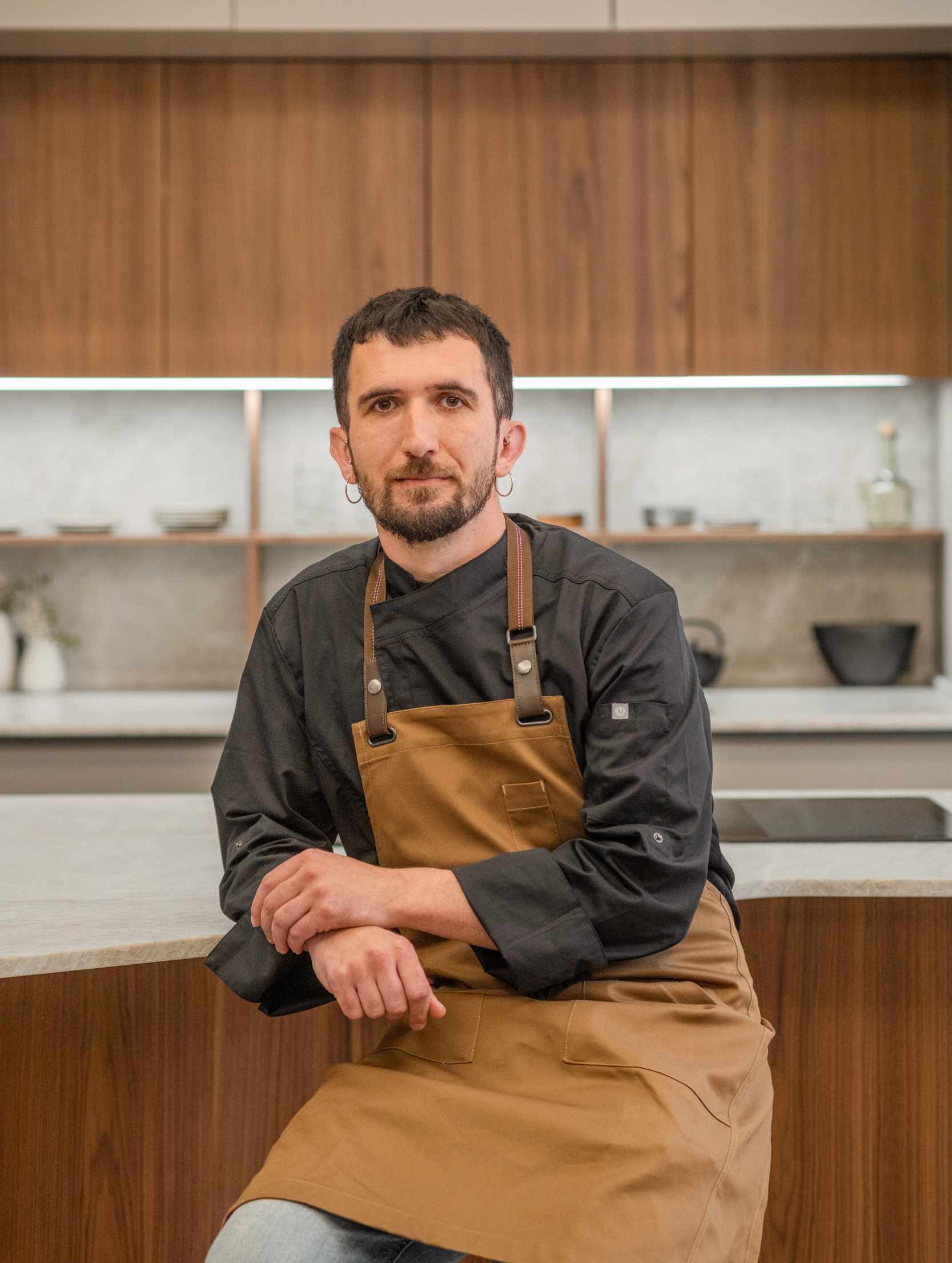
Ahantz emerges at the intersection of gastronomy, culture and architecture. The space hosts the new professional chapter of Basque chef Jon Gil Zárate in Ugao-Miraballes. Its origin stems from an earlier vision by Aitz Landaida, founder of AllOn Ugao, who has developed a career in his hometown linked to personalised care, physiotherapy, osteopathy and sports performance. Deeply connected to the local territory, he envisioned the creation of a singular space designed to foster a distinctive experience centred around gathering, wellbeing and local life.
Building on this foundation, and through the close relationship between both collaborators, Jon Gil Zárate activates the space with Ahantz: an intimate, participatory and contemporary gastronomic concept focused on sharing and transmitting knowledge of traditional Basque cuisine.
At BAT, we approached the project as something beyond the design of a gastronomic interior. Ahantz was conceived as a place capable of expressing a narrative where memory, community and cooking coexist naturally. The aim was to create an environment for a close and immersive culinary experience, deeply connected to local gastronomy while going beyond the plate itself.
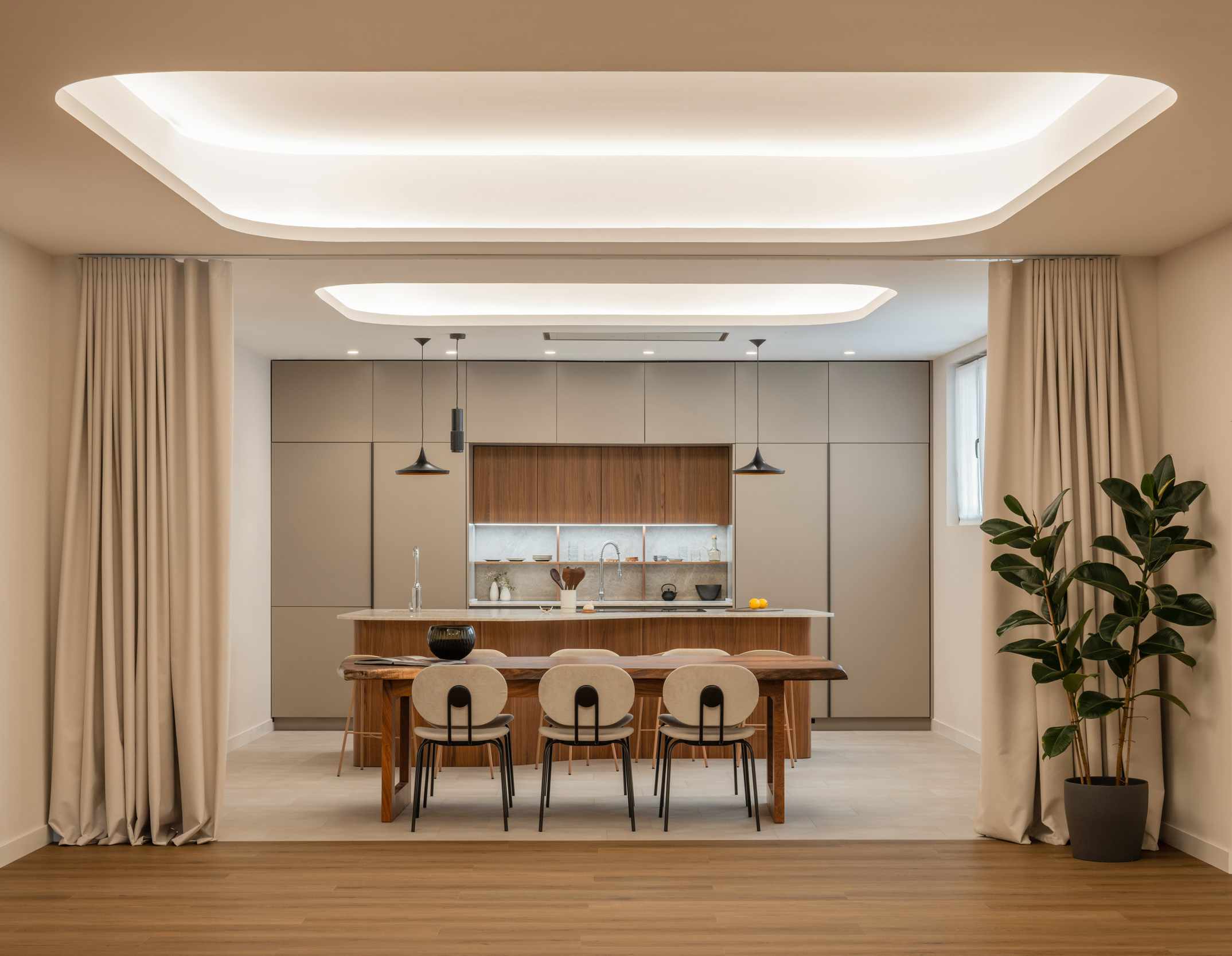
Ahantz is conceived as a culinary workshop by prior booking, where food and drink become part of a wider, immersive experience. Gastronomy serves as the connecting thread of a series of organic and participatory encounters designed to encourage a deeper awareness of produce, seasonality and place. Rooted in nature and local culture, the project understands the environment itself as what defines the rhythm of the kitchen: the seasons shape the ingredients, the processes and the possibilities of each experience. From this perspective, sustainability is approached through a cuisine centred on local and seasonal produce, respecting natural cycles while strengthening relationships with producers, landscape and community.
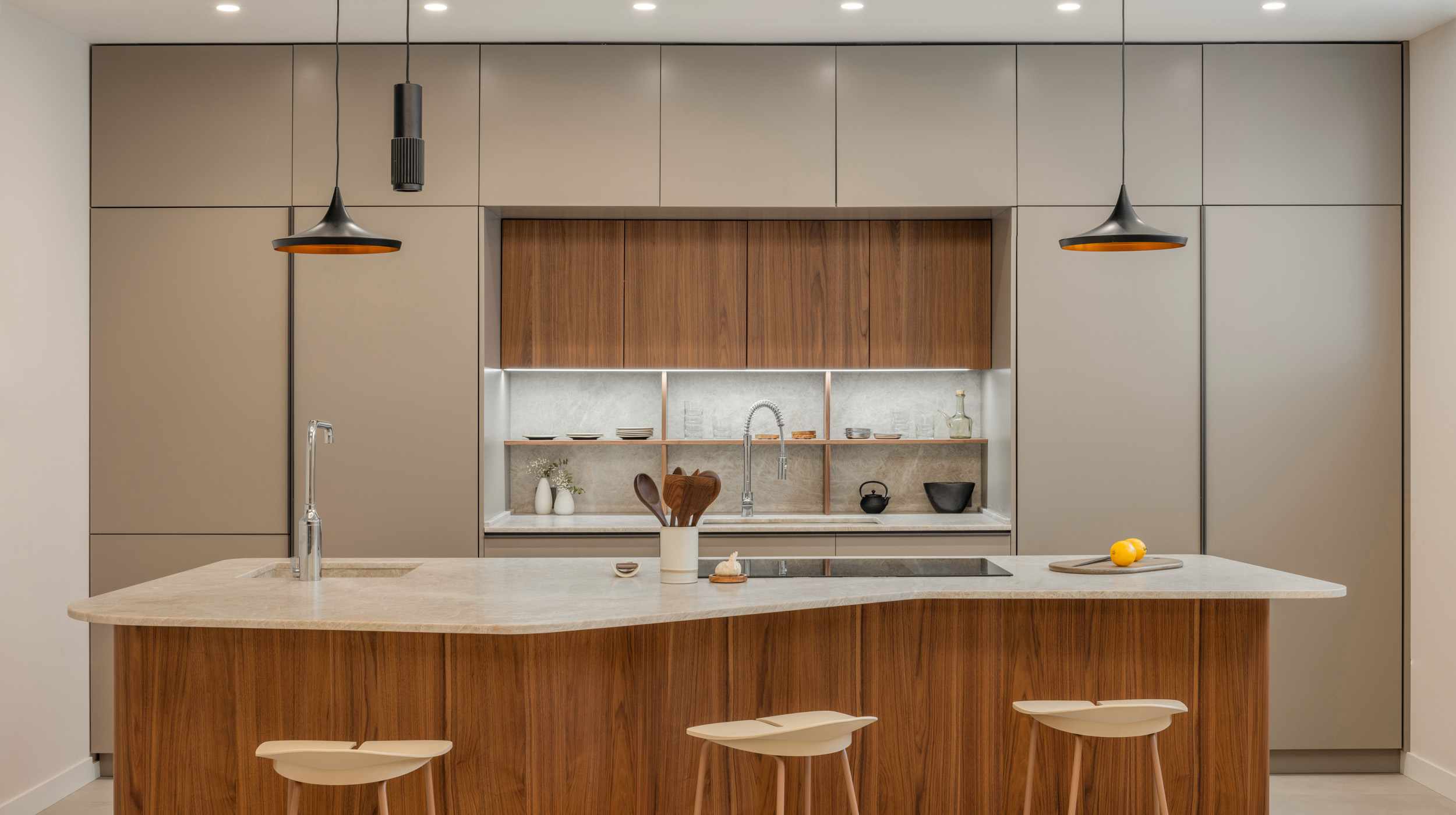
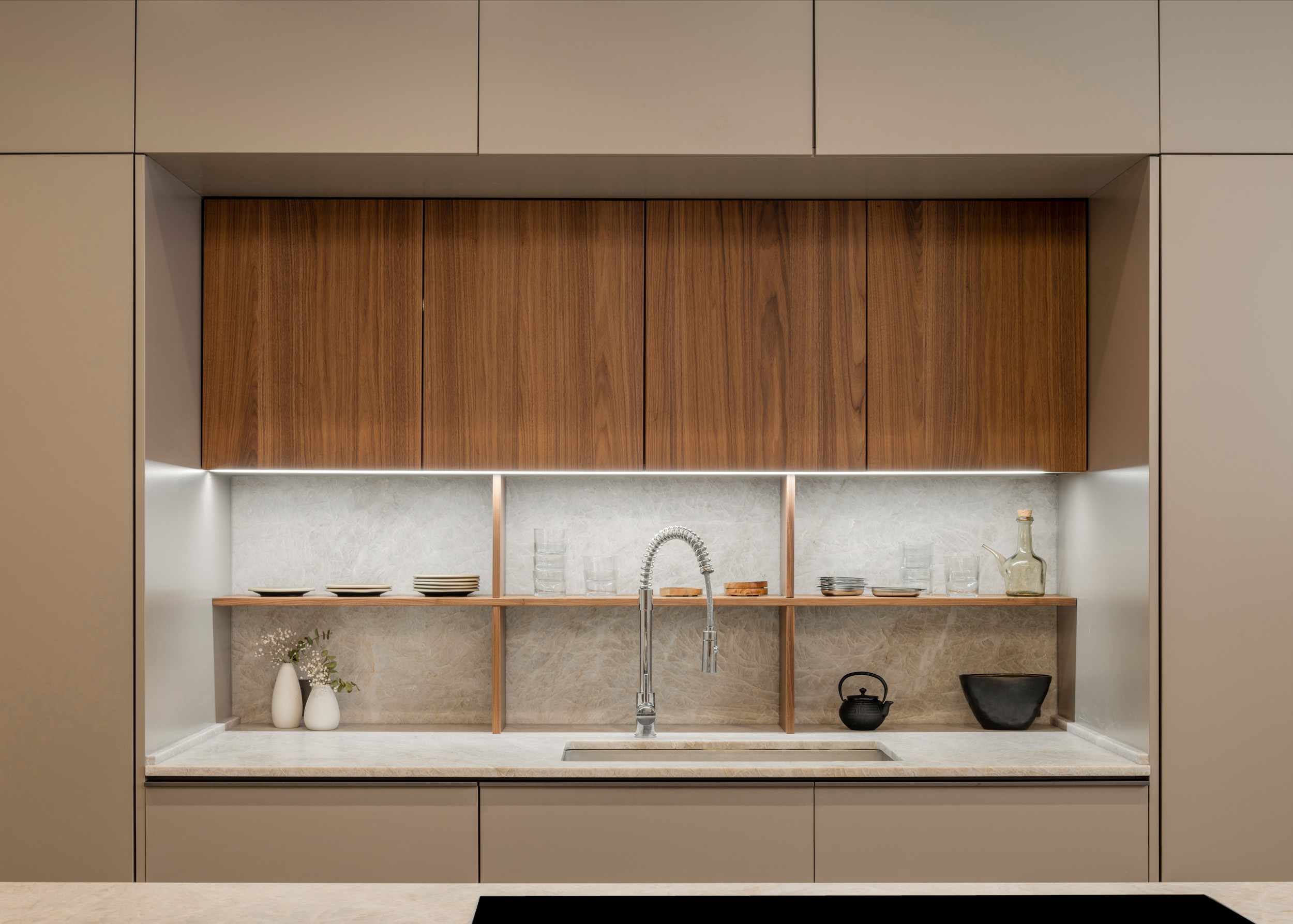
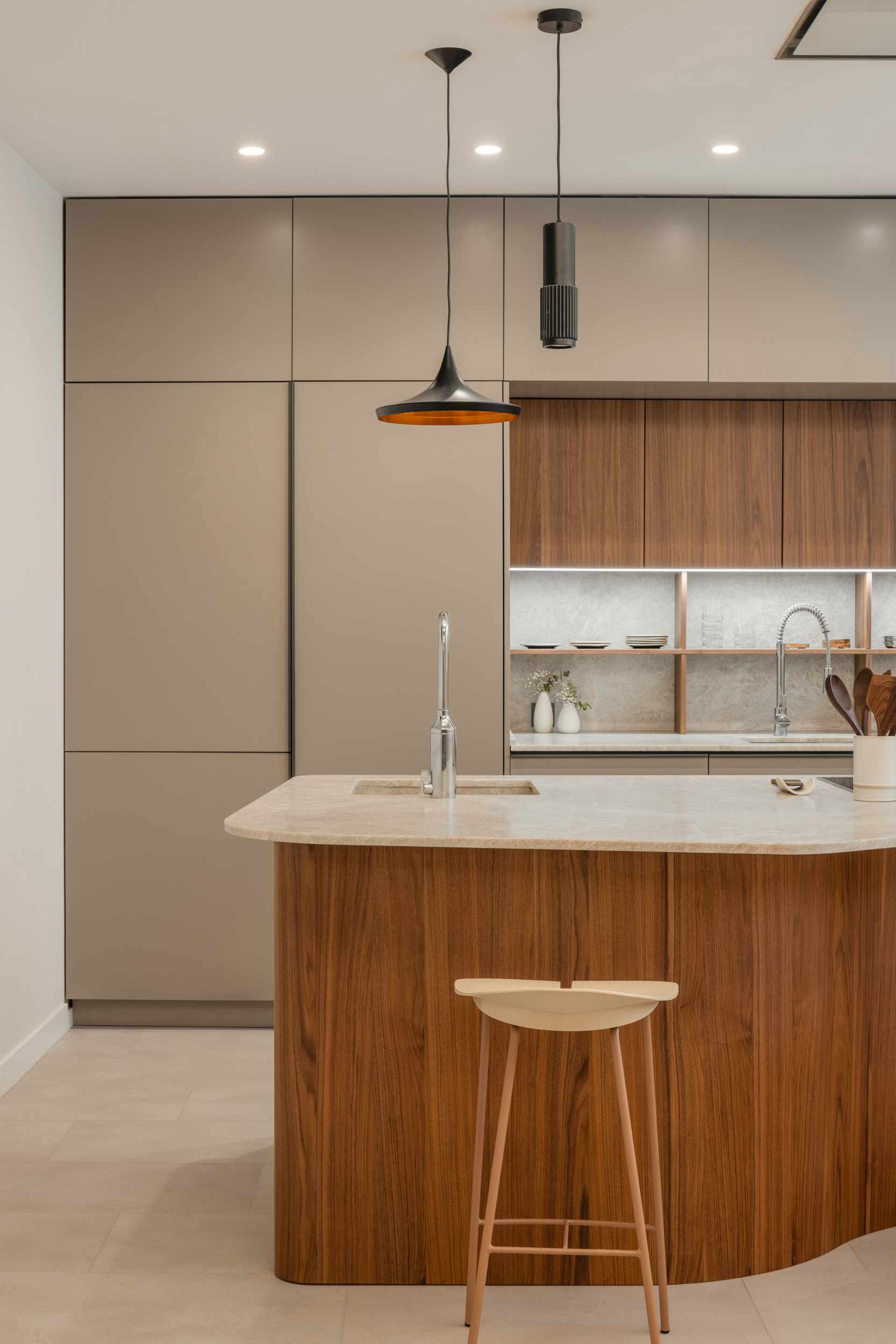
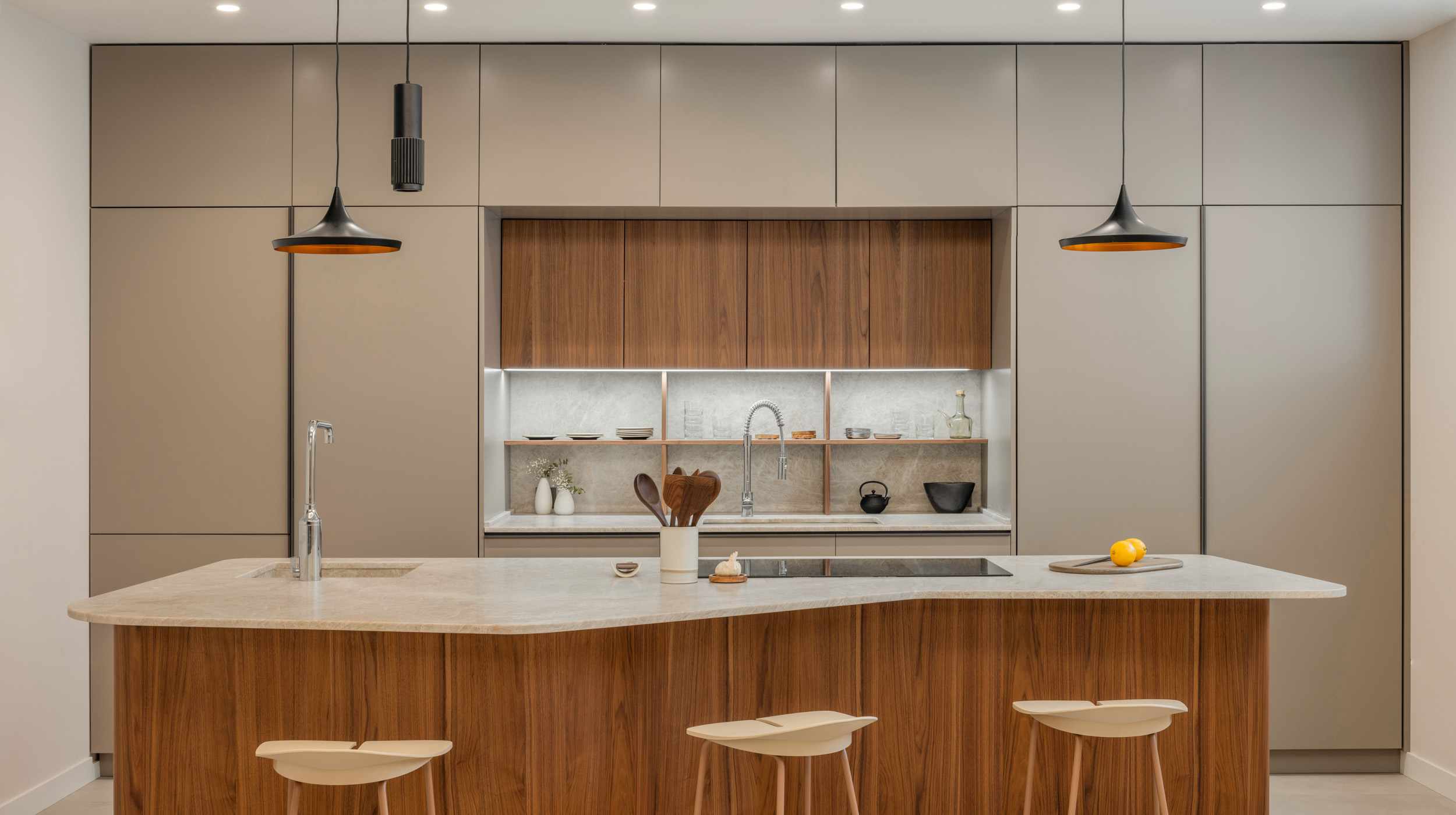
“We wanted to demonstrate that a kitchen resembling one that could belong to any of our homes can also become the setting for gastronomy at the highest level. The central island operates as a 360º kitchen, a place to cook, converse, learn and gather once again around something that, within Basque society, has never lost its significance: gastronomy as a space for connection, culture and community.”
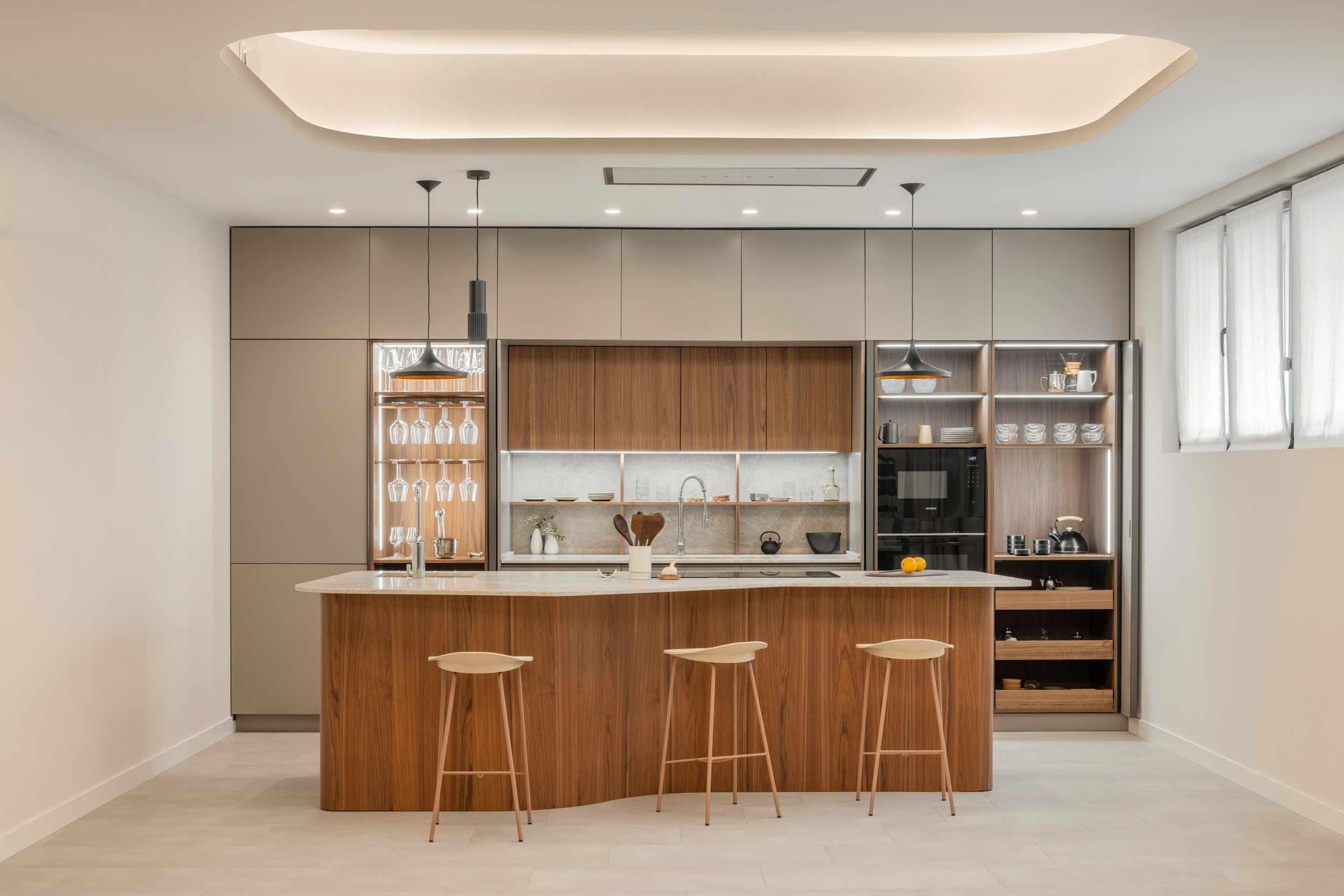
A space that captures the essence of the traditional Basque txoko: shared cooking, conversation, long gatherings around the table and community life, reinterpreted through a contemporary, warm and functional language. The result is an intimate, honest and flexible interior designed to host small-scale culinary experiences where food, dialogue and atmosphere become part of the same ritual.
The layout is organised around a central kitchen island and bar, conceived as the operational and emotional heart of the project. Rather than being hidden or pushed into the background, the kitchen becomes the centre of the experience: a place for explaining, sharing and learning. Guests gather around the bar, engaging in direct conversation with the chef, the cooking process and the ingredients themselves.
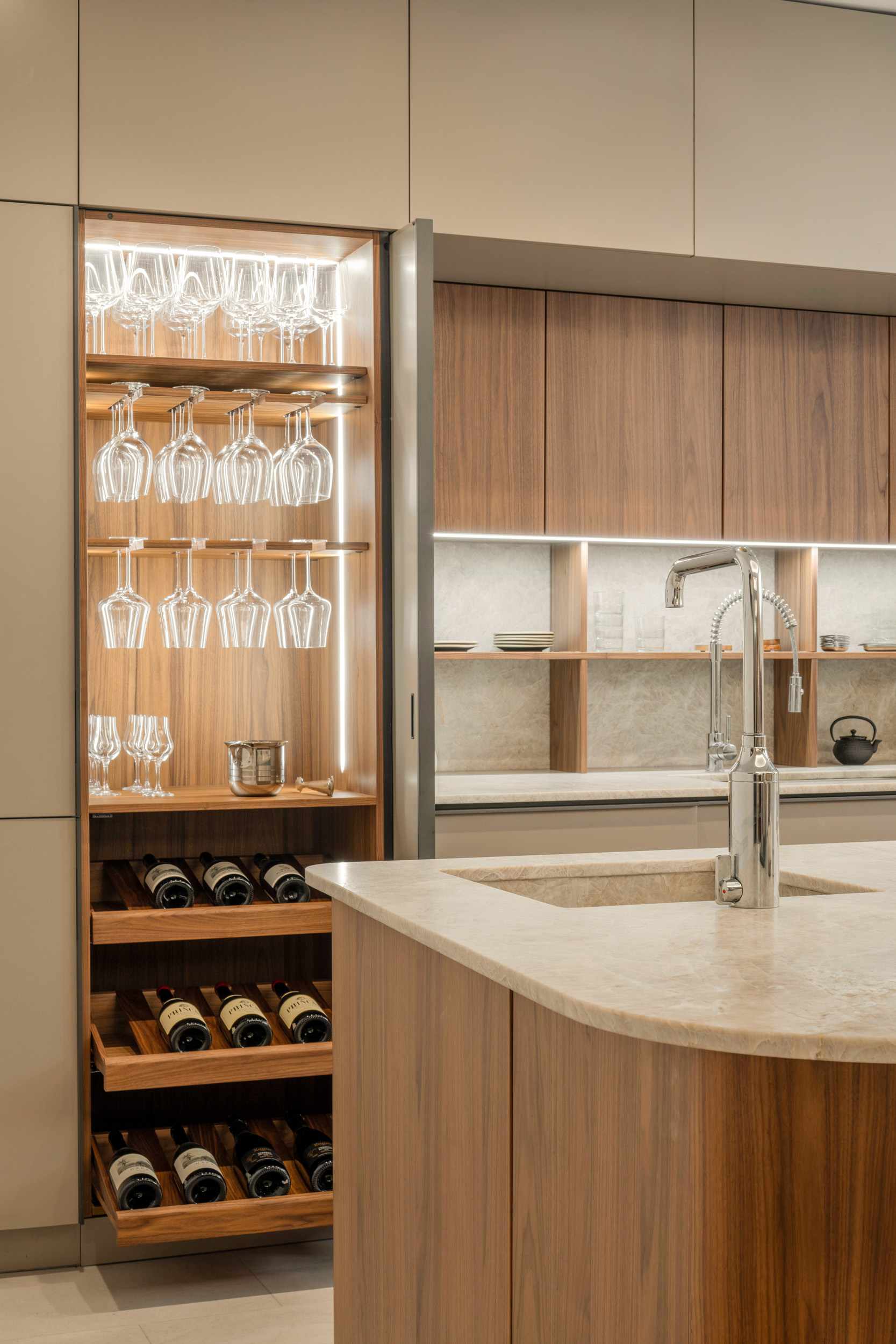
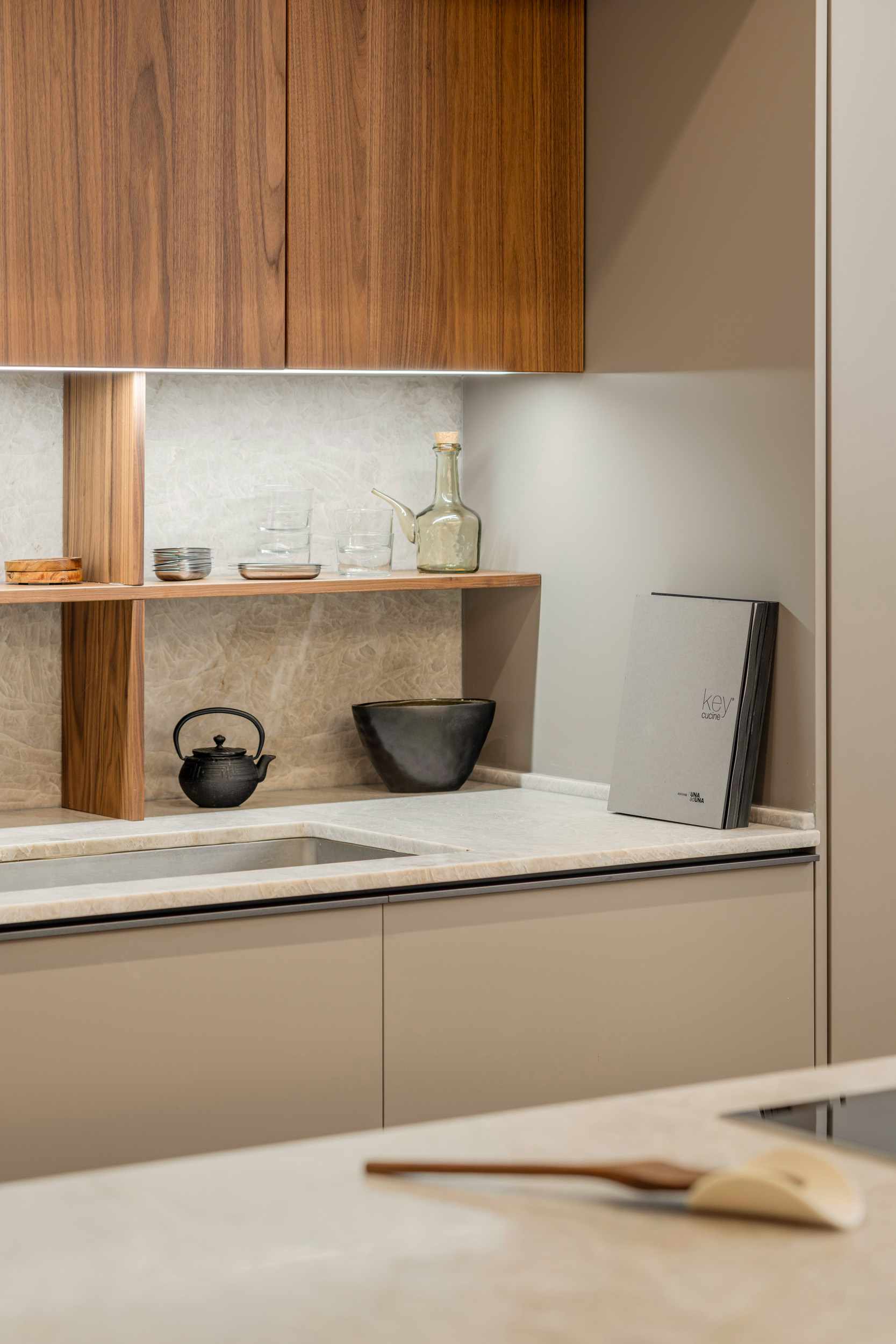
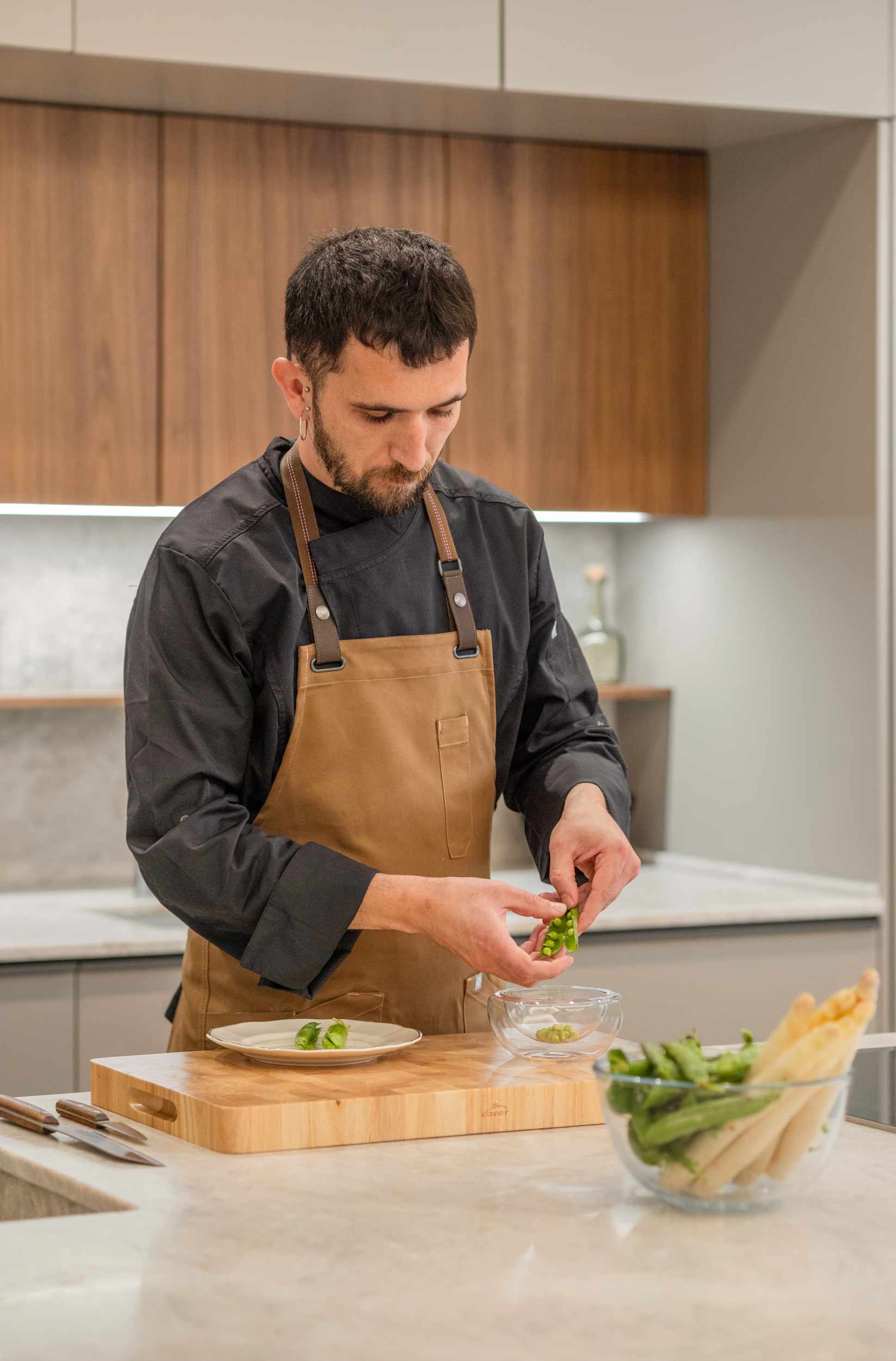
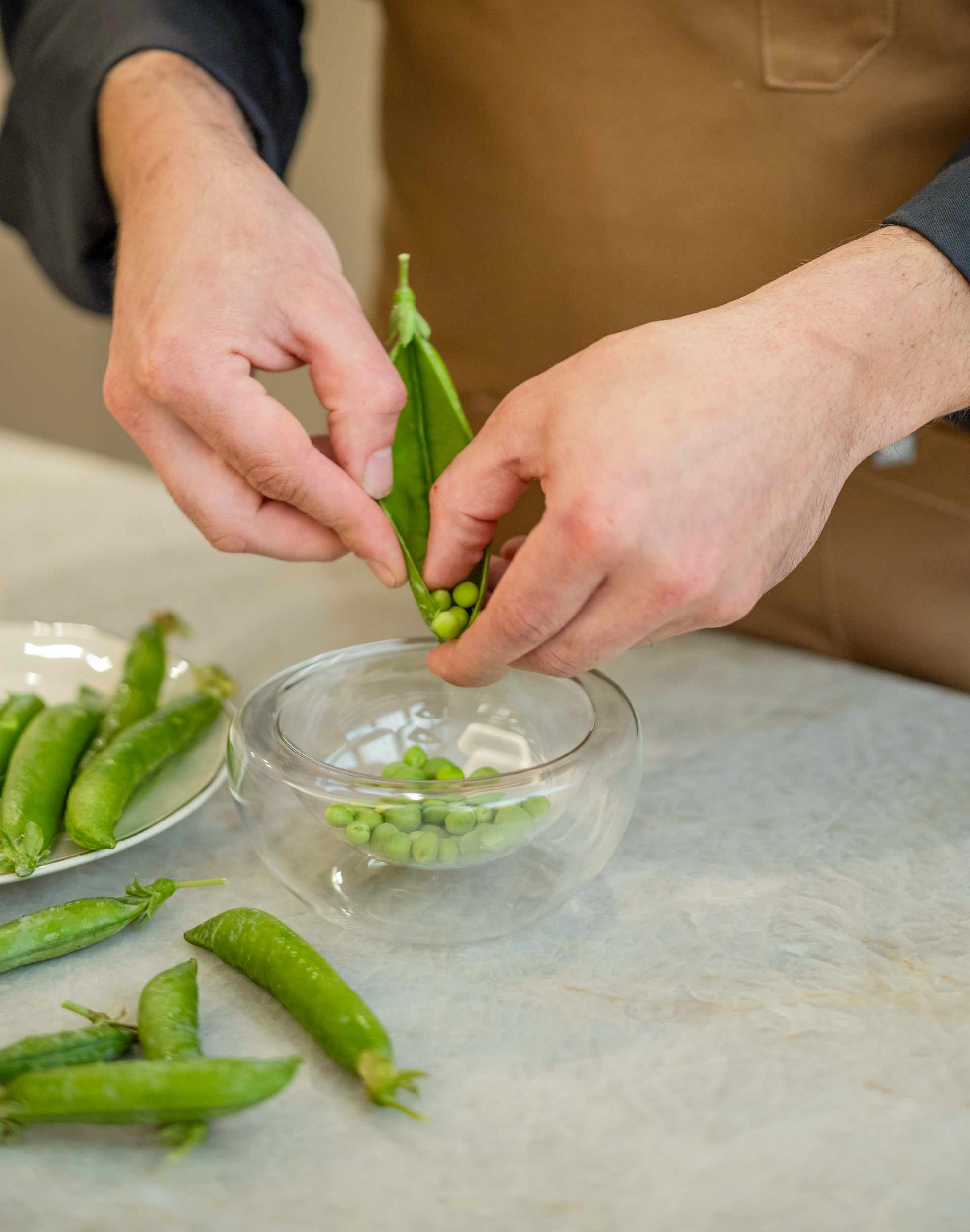
The kitchen, developed by Key Cucine, structures the space through a restrained and precise composition. The Perla Venata natural quartzite countertop by Marmolería Vascongada introduces a strong mineral presence that dialogues with the warmth of the wood and the project’s overall material palette. A natural material that brings character and aesthetic value to the space while responding to the functional demands of a kitchen conceived for frequent and intensive use. The proposal is completed with Ant stools and Hari chairs by Ondarreta, reinforcing the participatory nature of the space and bringing guests physically closer to the culinary process.
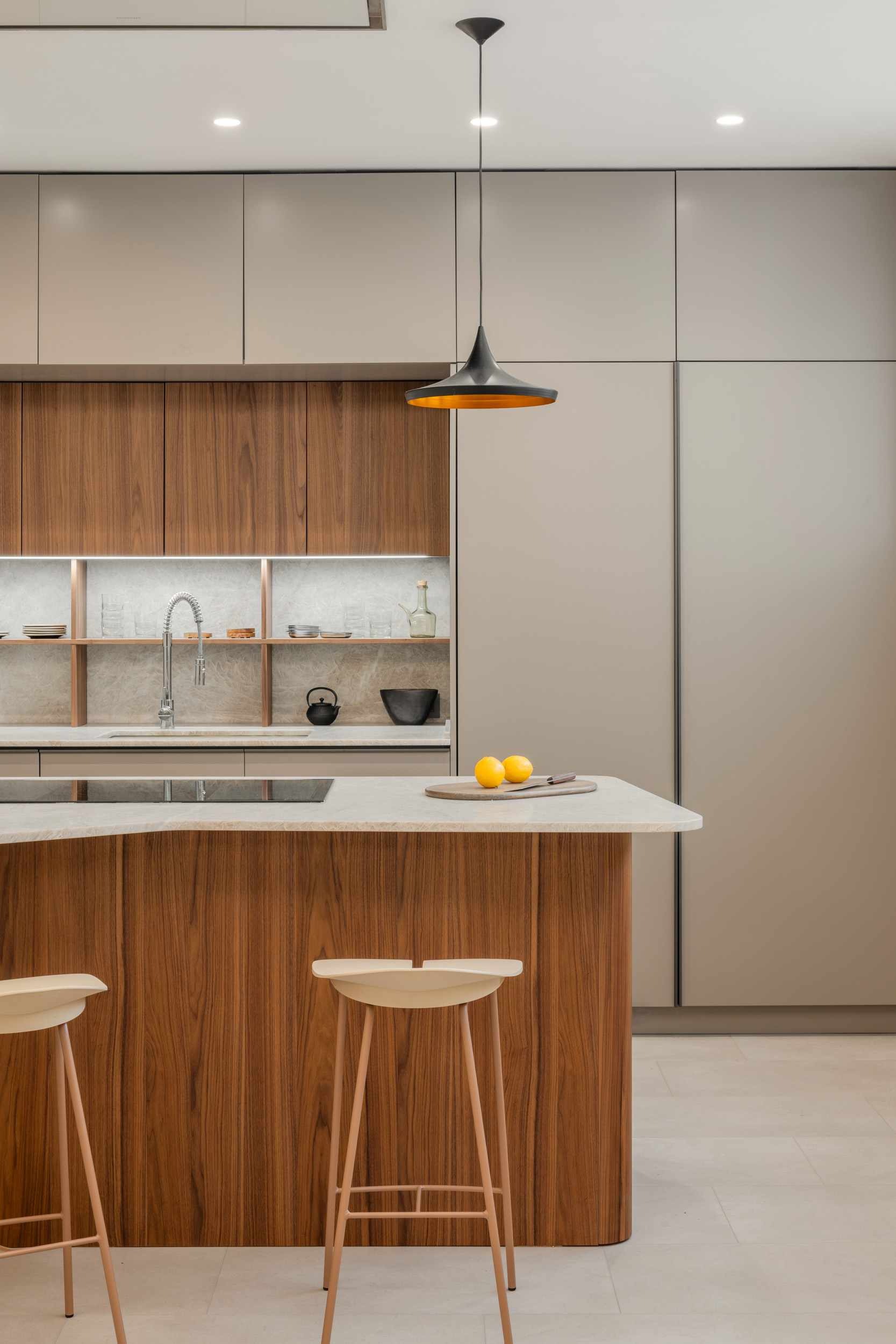
The project works with a restrained palette, warm textures and durable solutions, seeking a balance between domesticity, sobriety and character. Materials shape the interior and interact directly with the gastronomic concept: every decision is oriented towards a cuisine rooted in proximity and connection. At Ahantz, sustainability is not approached as an isolated gesture, but as a way of working. This idea runs throughout the design proposal through the use of local elements, respect for materials and the creation of a durable, functional space designed for real use.